World War 3 fears remain at an all-time high and we have enough data to know what states would be the least safe in the event of a nuclear attack.
With Israel and the US’ strikes on Iran, fears of a global conflict rivaling previous world wars are certainly bubbling over.
While there have always been fears of a new global conflict, the uncertainty of the current situation has left a lot of people on edge.
The biggest fear tends to stem from the idea that the next global war will result in the use of nuclear weapons between nations.
Although some people may be certain that a nuclear strike on the US would focus solely on causing the most death and destruction, that isn’t always the case.
It can often prove to be more strategic to attack a nations ability to defend itself or counter attack, in this case it would be targeting the many missile silos that the US has on land.
With this in mind, there are some states that would be a lot safer than others.
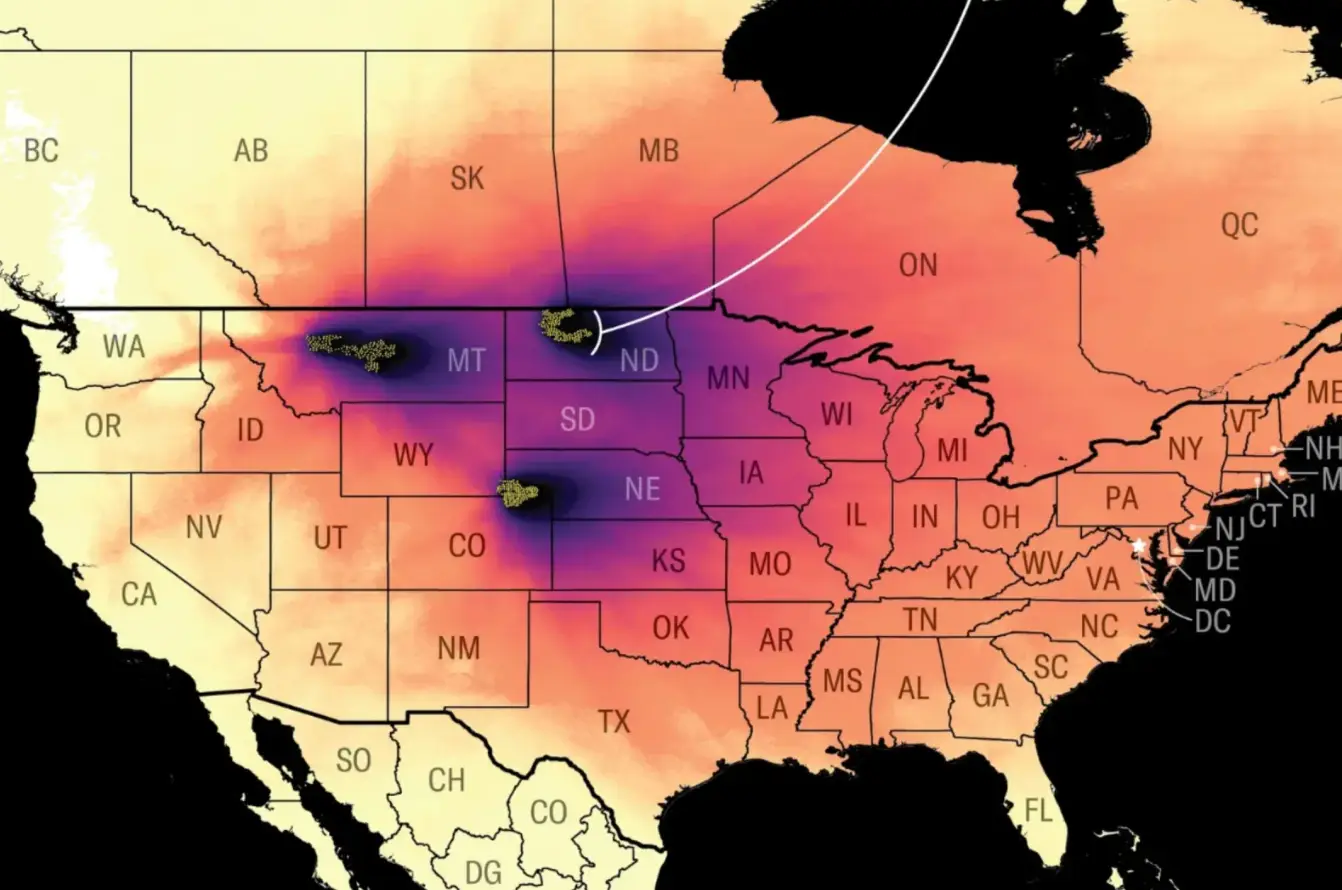
The locations a nuclear strike could target in the US – the yellow dots represent missile silos (Sébastien Philippe, Svitlana Lavrenchuk and Ivan Stepanov/Scientific American)
A fallout maps by the Scientific American magazine has previously shown just where would be the most impacted should there be a nuclear attack on missile silos in the U.S. heartland i.e Colorado, Wyoming, Nebraska, Montana and North Dakota.
A 2024 Newsweek report analyzing this map found that these 8 places would be the most affected by radiation exposure risk, and are therefore the most dangerous states to live in.
The eight places were:
- Montana
- Wyoming
- Colorado
- Nebraska
- South Dakota
- North Dakota
- Iowa
- Minnesota
On the flipside of this, there were 15 different states that were considered the ‘safest’ to live in, with all things considered.
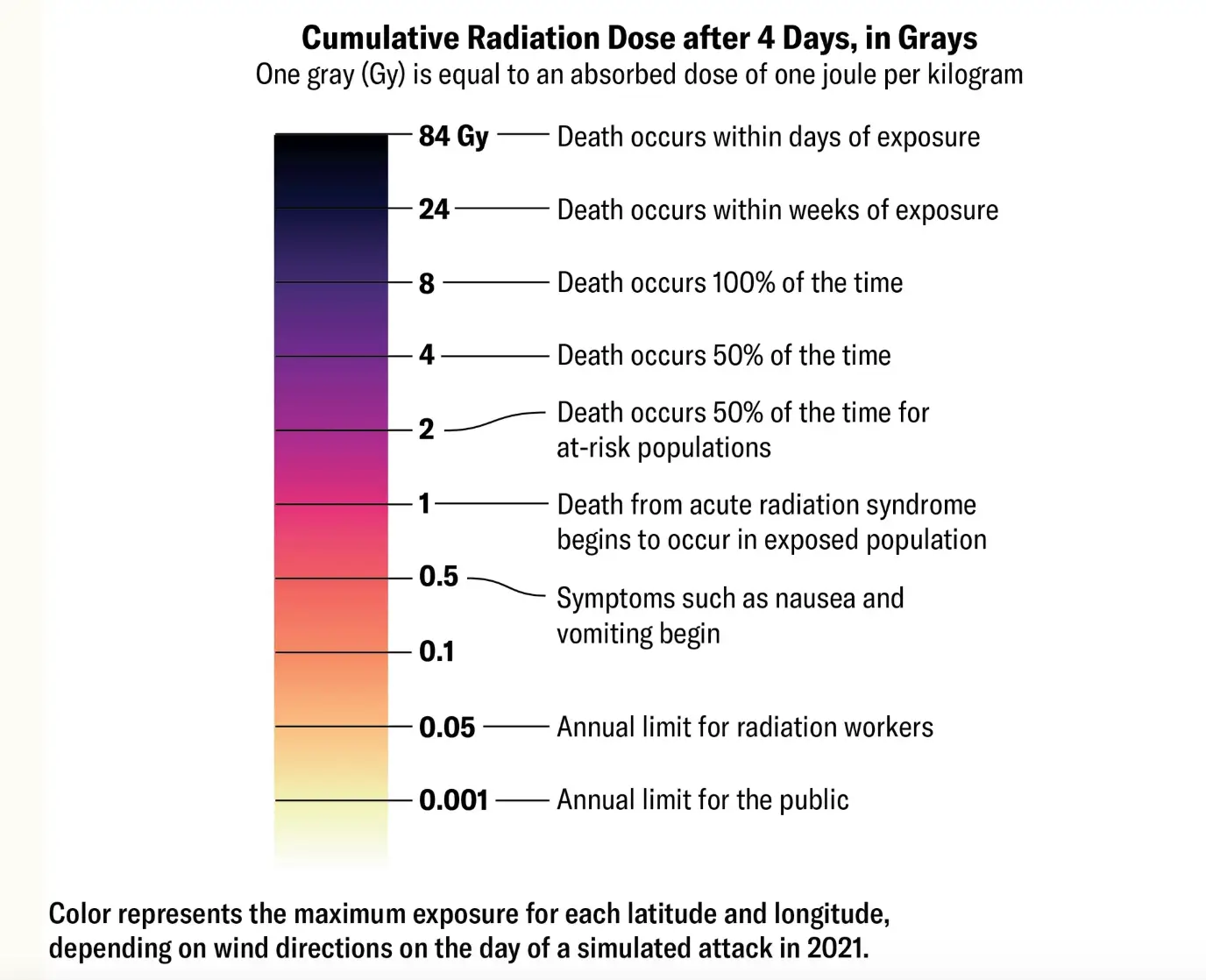
Color represents the maximum exposure for each latitude and longitude, depending on wind directions on the day of a simulated attack in 2021 (Sébastien Philippe, Svitlana Lavrenchuk and Ivan Stepanov/Scientific American)
They were:
- Maine
- New Hampshire
- Vermont
- Massachusetts
- Rhode Island
- Connecticut
- New York
- New Jersey
- Pennsylvania
- Delaware
- Maryland
- District of Columbia
- Virginia
- West Virginia
- North Carolina
- South Carolina
- Georgia
- Florida
- Alabama
- Mississippi
- Tennessee
- Kentucky
- Ohio
- Indiana
- Michigan
With all of that said, no where is particularly safe if modern nuclear weapons are used in a global conflict, according to experts that spoke to the outlet.
John Erath, the Senior Policy Director for the Center for Arms Control and Non-Proliferation said: “While those who live near military facilities, ICBM silos in the Midwest or submarine bases along the coasts might bear the most immediate and severe consequences of a nuclear attack, there’s no question: ANY nuclear war or weapons detonation would be bad for everyone.
“Nowhere is truly ‘safe’ from fallout and other consequences like contamination of food and water supplies and prolonged radiation exposure.”